early in the story
News of Netherfield Park
Mrs. Bennet excitedly informs her husband that Netherfield Park has been let to a wealthy young man from the north of England, Mr. Bingley. She immediately begins scheming to have one of her five daughters marry him, seeing this as a perfect opportunity to secure their futures. Mr. Bennet, with his characteristic dry wit, teases her about her matchmaking ambitions, but she remains undeterred, insisting that he must visit Mr. Bingley to pave the way for the family's introduction. This opening scene establishes the central preoccupation of the novel: the pursuit of advantageous marriages within the constraints of social class and family circumstance.
shortly after the news
Mr. Bennet Visits Mr. Bingley
Despite his earlier protestations, Mr. Bennet secretly pays a visit to Mr. Bingley, much to the astonishment and delight of his wife and daughters. He reveals his visit only after the fact, enjoying the surprise and the subsequent flurry of excitement. Mrs. Bennet is overjoyed, believing her plans are now set in motion, and the family eagerly anticipates meeting the new neighbor at the upcoming Meryton assembly. This event marks the beginning of the Bennet family's active engagement with the new residents of Netherfield.
early in the story
The Meryton Assembly
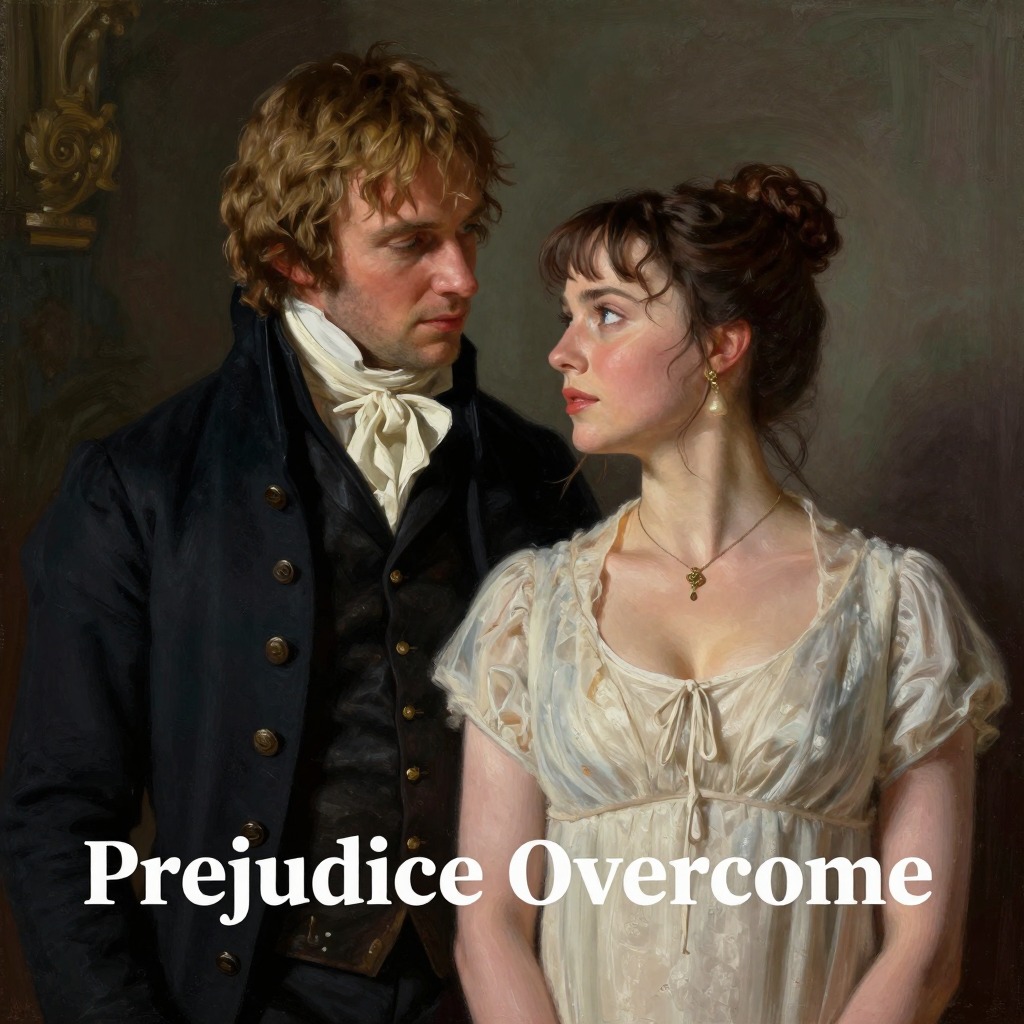
At the Meryton assembly, the Bennet sisters finally meet Mr. Bingley, who is charming and dances with Jane twice, sparking Mrs. Bennet's hopes. His friend, Mr. Darcy, is introduced but is quickly deemed proud and disagreeable after he refuses to dance with anyone outside his party and famously dismisses Elizabeth as 'tolerable, but not handsome enough to tempt me.' Elizabeth overhears this slight and develops a strong prejudice against him, a feeling that will shape much of the early conflict. The evening establishes the initial impressions of the two central male characters and sets the stage for the novel's central romantic tensions.
after the Meryton Assembly
Jane and Elizabeth Discuss Bingley
In private, Jane confesses to Elizabeth her admiration for Mr. Bingley, praising his good nature and manners. Elizabeth, while happy for her sister, playfully teases her about her tendency to see only the good in everyone. She also expresses her own dislike for Bingley's sisters, whom she finds proud and conceited. This conversation reveals the close bond between the two sisters and highlights their contrasting temperaments: Jane's gentle optimism versus Elizabeth's sharper, more critical judgment.
the morning after the assembly
Discussion of Pride and Prejudice
The Lucas and Bennet families gather to discuss the ball. Charlotte Lucas defends Darcy's pride, arguing it is justified by his station, while Elizabeth retorts that she could forgive his pride if he had not wounded hers. Mary Bennet offers a pedantic distinction between pride and vanity. This conversation explicitly introduces the novel's central themes of pride and prejudice, with Elizabeth's personal grievance against Darcy coloring her judgment. The scene also establishes Charlotte's pragmatic view of marriage, which will later lead her to accept Mr. Collins.
after the assembly
Charlotte Advises Jane on Bingley
Charlotte Lucas advises Jane to be more forward in showing her affection for Bingley, arguing that a woman must secure a man's interest before he loses his. Elizabeth disagrees, believing that genuine feelings should be allowed to develop naturally. Charlotte counters with her famously pragmatic view that 'happiness in marriage is entirely a matter of chance.' This conversation underscores the differing philosophies of the two friends: Elizabeth's romantic idealism versus Charlotte's cold-eyed practicality, a divergence that will later lead to a rift between them.
during the early Netherfield visits
Darcy Begins to Notice Elizabeth
At a party at Sir William Lucas's, Darcy begins to find himself drawn to Elizabeth, despite his earlier dismissal. He is captivated by the intelligence and liveliness in her eyes, and he starts to listen to her conversations. Elizabeth, unaware of his growing interest, remains determined to dislike him. When Sir William attempts to force a dance between them, Elizabeth pointedly refuses, much to Darcy's surprise. This moment marks the beginning of Darcy's internal struggle against his growing attraction to a woman he considers socially beneath him.
after the Lucas party
Jane Falls Ill at Netherfield
Jane receives an invitation to dine at Netherfield. Mrs. Bennet, scheming to keep her there, insists she ride a horse in the rain, ensuring she will be forced to stay overnight. Jane indeed catches a severe cold, and Elizabeth, deeply concerned, walks three miles through muddy fields to nurse her. Her arrival, with her petticoat six inches deep in mud, shocks the fashionable Bingley sisters, who see it as unladylike. However, Bingley is charmed by her devotion, and Darcy is struck by the 'brilliancy which exercise had given to her complexion.'
during Jane's illness
Elizabeth Stays at Netherfield
Elizabeth remains at Netherfield to care for Jane, enduring the condescending company of Miss Bingley and Mrs. Hurst. The sisters mock her country manners, while Darcy finds himself increasingly intrigued by her. A lively debate ensues about the definition of an 'accomplished woman,' with Darcy setting an impossibly high standard. Elizabeth wittily challenges him, and their verbal sparring reveals a growing intellectual and emotional connection, even as they maintain their outward antagonism. Miss Bingley's jealousy of Elizabeth becomes more apparent.
during Jane's illness
Mrs. Bennet Visits Netherfield
Mrs. Bennet arrives at Netherfield with Lydia and Kitty, ostensibly to check on Jane but actually to further her matchmaking schemes. Her vulgar and tactless behavior mortifies Elizabeth, who is acutely aware of how it appears to Darcy and the Bingley sisters. Mrs. Bennet loudly boasts about Jane's beauty and her hopes for a match with Bingley, while Lydia boldly reminds Bingley of his promise to give a ball. The visit confirms Darcy's negative opinion of the Bennet family's lack of propriety, a key factor in his later decision to separate Bingley from Jane.
during Jane's convalescence at Netherfield
Darcy and Elizabeth Debate Character
During an evening at Netherfield, Darcy and Elizabeth engage in a pointed conversation about the nature of character and forgiveness. Darcy asserts that his good opinion, once lost, is lost forever, a statement that Elizabeth later recalls when judging his actions. Elizabeth, in turn, declares that she 'dearly love[s] a laugh' and enjoys exposing folly. Their verbal duel is both a display of their intellectual compatibility and a deepening of their mutual misunderstanding. Miss Bingley, jealous of the attention Darcy pays Elizabeth, tries to disrupt their conversation.
after Jane's recovery
The Bennet Sisters Return Home
Jane is finally well enough to leave Netherfield, and the sisters return to Longbourn. Mrs. Bennet is disappointed that their stay did not result in a proposal, while Mr. Bennet is genuinely glad to have them back. The family settles back into their routines, with Mary absorbed in her studies and Kitty and Lydia full of gossip about the militia officers now stationed in Meryton. This return home marks the end of the first major social interaction with the Netherfield party and sets the stage for new developments.
after the sisters' return
Mr. Collins's Letter Arrives
Mr. Bennet announces that he has received a letter from his cousin, Mr. Collins, who is the heir to the Longbourn estate due to the entail. The letter is pompous and obsequious, announcing Mr. Collins's intention to visit in order to 'make [his] peace' with the family. Mr. Bennet is amused by his cousin's absurdity, while Mrs. Bennet is furious at the reminder of the entail that will disinherit her daughters. The letter introduces a new character whose arrival will disrupt the household and lead to a surprising marriage.
the day of his promised visit
Mr. Collins Arrives at Longbourn
Mr. Collins arrives at Longbourn, a tall, heavy-looking young man with formal and pompous manners. He immediately begins flattering Mrs. Bennet and praising the house, which he will one day inherit. He also reveals his patroness, Lady Catherine de Bourgh, and speaks of her with excessive deference. The family finds him ridiculous, but Mrs. Bennet is somewhat mollified by his compliments. Mr. Collins's arrival introduces a new dynamic into the household, as he is clearly looking for a wife among his cousins.
the evening of his arrival
Mr. Collins Dines at Longbourn
During dinner, Mr. Collins monopolizes the conversation with praise for Lady Catherine de Bourgh, describing her grandeur and condescension in tedious detail. Mr. Bennet enjoys his guest's absurdity, while Elizabeth is struck by his servility and self-importance. Mr. Collins also reveals that Lady Catherine has advised him to marry, hinting at his intentions. The evening establishes Mr. Collins as a figure of fun, but also as a serious suitor, as he begins to eye his cousins as potential wives.
the evening after his arrival
Mr. Collins Reads Fordyce's Sermons
Mr. Collins offers to read aloud to the ladies, but when he discovers the book is a novel, he refuses and instead chooses Fordyce's Sermons. Lydia rudely interrupts him, and he is offended, but he soon forgives her and challenges Mr. Bennet to a game of backgammon. This incident highlights Mr. Collins's pomposity and his lack of social grace, as well as the general disregard for his authority by the younger Bennet sisters. It further cements his role as a comic figure.
the morning after his arrival
Mr. Collins Shifts His Attention to Elizabeth
Mrs. Bennet, hoping to secure a match, hints to Mr. Collins that Jane is likely to be soon engaged. Mr. Collins, who had initially fixed on Jane, promptly shifts his attention to Elizabeth, the next eldest. Mrs. Bennet is delighted at the prospect of having two daughters married. This maneuver sets the stage for Mr. Collins's subsequent proposal to Elizabeth, which she will famously reject.
during a walk to Meryton
Introduction to George Wickham
While walking in Meryton with Mr. Collins, the Bennet sisters meet a handsome and charming new officer, Mr. Wickham. They are immediately captivated by his pleasant manners. Their encounter is interrupted by the arrival of Darcy and Bingley on horseback. A tense and silent exchange occurs between Darcy and Wickham, both of whom change color, sparking Elizabeth's intense curiosity. This meeting introduces the charismatic Wickham and plants the seeds of a major conflict, as Elizabeth will soon hear his version of his history with Darcy.
the evening of the introduction
Wickham's Story of Darcy's Injustice
At a party at Mrs. Phillips's house, Elizabeth has a long conversation with Wickham. He tells her a compelling story of how Darcy, out of jealousy and pride, cheated him out of a valuable living promised by the late Mr. Darcy. Elizabeth, already prejudiced against Darcy, readily believes Wickham's account and is filled with indignation. This conversation solidifies her negative opinion of Darcy and her sympathy for Wickham, setting up a major obstacle to any future relationship between her and Darcy.
the day after the party
The Netherfield Ball is Announced
Bingley and his sisters visit Longbourn to personally invite the Bennets to the long-anticipated Netherfield ball. Elizabeth looks forward to dancing with Wickham, while Jane hopes to spend more time with Bingley. The invitation brings a sense of excitement and anticipation to the household, but it also sets the stage for a series of social disasters and personal revelations.
before the Netherfield Ball
Mr. Collins Claims Elizabeth's First Dances
Mr. Collins asks Elizabeth for the first two dances at the Netherfield ball, a request she cannot refuse. This is a great disappointment, as she had hoped to dance with Wickham. The incident also makes Elizabeth realize that Mr. Collins intends to propose to her, a prospect she finds mortifying. This moment adds to Elizabeth's anxiety about the upcoming ball.
the night of the Netherfield Ball
Wickham is Absent from the Ball
At the Netherfield ball, Elizabeth is dismayed to find that Wickham is not present. His friend Denny hints that he stayed away to avoid Darcy. Elizabeth's disappointment turns to anger against Darcy, whom she blames for Wickham's absence. Her mood is further soured by having to dance the first two dances with the awkward Mr. Collins. The ball, which she had anticipated with pleasure, becomes a trial of her patience and composure.
at the Netherfield Ball
Elizabeth Dances with Darcy
To her surprise, Darcy asks Elizabeth to dance. She accepts, and their conversation is a tense and witty exchange. Elizabeth deliberately provokes him by mentioning Wickham, and Darcy's reaction confirms her suspicions about his role in the affair. The dance is a battle of wits, with Elizabeth trying to unsettle Darcy and Darcy struggling to maintain his composure. This encounter deepens their mutual fascination, even as it reinforces Elizabeth's prejudice.
at the Netherfield Ball
Miss Bingley Warns Elizabeth About Wickham
After her dance with Darcy, Miss Bingley approaches Elizabeth and warns her against Wickham, claiming he is a man of bad character and that Darcy has been kind to him. Elizabeth, however, dismisses this as a malicious attempt to defend Darcy and protect her brother's interests. She remains convinced of Wickham's innocence and Darcy's guilt. This exchange highlights the conflicting accounts of Wickham's character and deepens the mystery surrounding his past.
at the Netherfield Ball
Mrs. Bennet's Folly at the Ball
During supper, Mrs. Bennet loudly and indiscreetly discusses her expectation that Jane will soon marry Bingley, unaware that Darcy is within earshot. Elizabeth is mortified by her mother's vulgarity and lack of decorum. This public display of folly confirms Darcy's negative view of the Bennet family and provides him with a strong argument for separating Bingley from Jane. The scene is a turning point, as it solidifies the social obstacles to the match.
at the Netherfield Ball
Mary Bennet Sings at the Ball
After supper, Mary is persuaded to sing for the company. Her performance is weak and affected, and she continues for a second song despite the audience's lack of enthusiasm. Mr. Bennet finally intervenes, telling her she has 'delighted us long enough.' Elizabeth is again mortified by her family's behavior, which provides further amusement for the Bingley sisters and Darcy. The incident adds to Elizabeth's sense of shame and her awareness of her family's social liabilities.
the morning after the ball
Mr. Collins Proposes to Elizabeth
Mr. Collins formally proposes to Elizabeth, outlining his reasons for marrying and his expectation of a favorable answer. Elizabeth firmly and politely refuses him, but he refuses to accept her refusal, believing it to be a form of female modesty. Elizabeth is exasperated by his persistence and his inability to understand her clear rejection. This scene is a comic masterpiece, but it also marks a significant moment in Elizabeth's life, as she asserts her independence and rejects a secure but loveless marriage.
after Mr. Collins's proposal
Mrs. Bennet Pressures Elizabeth to Accept
Mrs. Bennet is furious when she learns of Elizabeth's refusal. She pressures Elizabeth to accept Mr. Collins, threatening to never speak to her again. Elizabeth remains resolute, and Mr. Bennet supports her, famously telling her that he will never see her again if she does marry Mr. Collins. This family conflict highlights the different values of the Bennet parents: Mrs. Bennet's obsession with financial security versus Mr. Bennet's respect for his daughter's happiness.
shortly after his proposal to Elizabeth
Charlotte Lucas Accepts Mr. Collins
Mr. Collins, rebuffed by Elizabeth, quickly proposes to Charlotte Lucas, who accepts him. Charlotte, at twenty-seven and without fortune, sees marriage to Mr. Collins as her only chance for a comfortable establishment. She explains her pragmatic decision to a shocked Elizabeth, stating, 'I am not romantic, you know; I never was.' Elizabeth is deeply disappointed in her friend, feeling that Charlotte has sacrificed every better feeling for worldly advantage. This event marks a significant rift in their friendship.
the day after Charlotte's acceptance
The Engagement is Announced
Sir William Lucas arrives at Longbourn to announce his daughter's engagement to Mr. Collins. The Bennet family is astonished and incredulous, with Mrs. Bennet particularly outraged. Elizabeth confirms the news, having heard it from Charlotte herself. The announcement causes a great deal of tension and resentment, especially from Mrs. Bennet, who feels that Charlotte has stolen a match that should have been Elizabeth's. The event reshapes the social dynamics of the neighborhood.
after the Netherfield party leaves
Miss Bingley's Letter Arrives
Jane receives a letter from Caroline Bingley announcing that the entire Netherfield party has left for London and does not intend to return for the winter. The letter also hints that Bingley is expected to marry Darcy's sister, Georgiana. Jane is heartbroken, realizing that Bingley has been persuaded to abandon her. Elizabeth is furious, blaming Darcy and the Bingley sisters for their cruel interference. This event dashes Jane's hopes and confirms Elizabeth's worst suspicions about Darcy's character.
after Christmas
Jane Visits London with the Gardiners
Jane accepts an invitation from her aunt and uncle, the Gardiners, to spend time in London, hoping to see Bingley. However, during her stay, Caroline Bingley neglects her, and Jane realizes that her friendship with Caroline was a pretense. She finally accepts that Bingley is lost to her. Elizabeth, meanwhile, learns from her aunt that Wickham has transferred his attentions to a Miss King, who has inherited a fortune. Elizabeth is not heartbroken, but she is disappointed in his mercenary nature.
in March
Elizabeth Visits the Collinses at Hunsford
Elizabeth travels to Kent to visit Charlotte and Mr. Collins at their parsonage in Hunsford. She is struck by the comfort of their home but also by Charlotte's strategy of avoiding her husband by spending time in her own sitting room. Elizabeth is also introduced to the grandeur of Rosings, the estate of Lady Catherine de Bourgh, who is Mr. Collins's patroness. The visit provides a new setting for Elizabeth's interactions with Darcy, who is also a nephew of Lady Catherine and is expected to visit Rosings.
during Elizabeth's visit to Hunsford
Dinner at Rosings
Elizabeth, along with Sir William Lucas and Maria, is invited to dine at Rosings. Lady Catherine proves to be an arrogant and domineering woman who interrogates Elizabeth about her family and education. Elizabeth remains composed and answers her impertinent questions with spirit, refusing to be intimidated. The dinner establishes Lady Catherine as a formidable antagonist and provides a contrast between her overbearing pride and Elizabeth's quiet dignity.
during Elizabeth's visit
Darcy and Colonel Fitzwilliam Arrive at Rosings
Darcy and his cousin, Colonel Fitzwilliam, arrive at Rosings for a visit. They call at the Parsonage, and Elizabeth is surprised to see Darcy again. Colonel Fitzwilliam is charming and sociable, and Elizabeth enjoys his company. Darcy, in contrast, is reserved and silent. The arrival of the two gentlemen adds a new dimension to Elizabeth's stay, as she finds herself in their company frequently.
during the Rosings visit
Elizabeth and Colonel Fitzwilliam Talk
Elizabeth and Colonel Fitzwilliam develop a friendly rapport, walking and talking together in the park. During one conversation, Colonel Fitzwilliam reveals that Darcy recently saved a friend from an imprudent marriage. Elizabeth immediately realizes that the friend is Bingley and that Darcy is the one who separated him from Jane. This revelation confirms her worst suspicions and fills her with anger and resentment against Darcy.
during Elizabeth's stay at Hunsford
Darcy's First Proposal
Darcy, unable to contain his feelings any longer, proposes to Elizabeth. He declares his love but also dwells on her inferior social connections and his own struggles against his attachment. Elizabeth, outraged by his arrogance and his role in separating Jane and Bingley, refuses him vehemently. She accuses him of ungentlemanly behavior and of ruining Wickham's prospects. The proposal is a disaster, leaving both parties angry and hurt.
the morning after the proposal
Darcy's Letter to Elizabeth
The next morning, Darcy gives Elizabeth a letter that explains his actions. He justifies his interference in Bingley's relationship with Jane, citing her apparent indifference and the impropriety of her family. He also reveals the truth about Wickham: that Wickham attempted to elope with Darcy's young sister, Georgiana, for her fortune. Elizabeth reads the letter with growing shock and shame, realizing that she has been completely wrong about both men. This letter is the turning point of the novel, forcing Elizabeth to re-evaluate her prejudices.
after reading Darcy's letter
Elizabeth's Self-Reflection
Elizabeth spends hours walking and reflecting on Darcy's letter. She is forced to confront her own blindness, vanity, and prejudice. She realizes that she was biased by his initial slight and by Wickham's charming manners, and that she had been unjust to Darcy. She feels deep shame for her behavior and acknowledges that she has never truly known herself. This moment of profound self-awareness marks Elizabeth's moral and emotional growth.
after Darcy's letter
Elizabeth Leaves Hunsford
Elizabeth's visit to Hunsford comes to an end. She says goodbye to Charlotte and Mr. Collins, who is as pompous as ever. She travels to London to spend a few days with the Gardiners before returning to Longbourn. She is eager to see Jane and to share her news, but she is also burdened by the secret of Darcy's letter and her own changed feelings. The journey marks a transition from the closed world of Hunsford back to the familiar setting of Longbourn.
after Elizabeth's return from Hunsford
Lydia's Elopement with Wickham
Elizabeth receives a frantic letter from Jane informing her that Lydia has eloped with Wickham. The family is in a state of crisis, fearing that the couple has not married and that Lydia's reputation is ruined. Mr. Bennet goes to London to search for them, and the family is plunged into disgrace and anxiety. This event is a major crisis that threatens the social standing of the entire Bennet family and seems to destroy any possibility of a future for Elizabeth and Darcy.
after Lydia's elopement
Darcy Discovers the Fugitives
Darcy, who had left Derbyshire shortly after Elizabeth, learns of Lydia's elopement. He takes it upon himself to find the couple, tracking them down in London through Mrs. Younge, Wickham's former accomplice. He then negotiates with Wickham, forcing him to marry Lydia by paying off his debts and providing a settlement. Darcy does all of this in secret, motivated by his love for Elizabeth and his sense of responsibility for not exposing Wickham's true character earlier.
after Darcy's intervention
Lydia and Wickham's Marriage is Arranged
Mr. Gardiner writes to Mr. Bennet with the news that Lydia and Wickham have been found and that a marriage has been arranged. The terms are surprisingly generous, and Mr. Bennet suspects that his brother-in-law has paid a large sum to make it happen. The family is relieved that Lydia's reputation will be saved, though the marriage is clearly a poor one. Elizabeth, however, soon learns from Mrs. Gardiner's letter that it was Darcy, not her uncle, who orchestrated the entire affair.
after their marriage
Lydia and Wickham Visit Longbourn
The newly married Lydia and Wickham visit Longbourn. Lydia is as shameless and boisterous as ever, boasting about her marriage and showing off her wedding ring. Wickham is charming but clearly indifferent to his wife. The visit is painful for Elizabeth and Jane, who are acutely aware of the disgrace and the true cost of the marriage. During the visit, Lydia accidentally reveals that Darcy was present at her wedding, sparking Elizabeth's curiosity.
after Lydia's visit
Elizabeth Learns the Truth from Mrs. Gardiner
Elizabeth writes to Mrs. Gardiner, asking for an explanation of Darcy's presence at Lydia's wedding. Mrs. Gardiner's reply reveals the full extent of Darcy's involvement: he found the couple, negotiated with Wickham, paid his debts, and secured his commission. He did it all for Elizabeth's sake. Elizabeth is overwhelmed with gratitude and a new, deeper love for Darcy. She realizes the depth of his character and the magnitude of his sacrifice.
after Lydia's marriage
Bingley Returns to Netherfield
Bingley returns to Netherfield for the shooting season, accompanied by Darcy. He calls on the Bennets, and it is clear that his feelings for Jane are unchanged. Mrs. Bennet is overjoyed and immediately begins scheming again. Elizabeth is anxious about seeing Darcy, unsure of his feelings after her rejection. The return of the two gentlemen sets the stage for the novel's final romantic resolutions.
after his return to Netherfield
Bingley Proposes to Jane
Bingley, now free from Darcy's influence and assured of Jane's affection, proposes to her. Jane accepts, and the family is overjoyed. Mrs. Bennet is triumphant, and even Mr. Bennet is pleased. The engagement is a happy resolution to the long period of uncertainty and heartache. It also clears the way for the final resolution of the central romance between Elizabeth and Darcy.
after Jane's engagement
Lady Catherine Confronts Elizabeth
Lady Catherine de Bourgh, having heard rumors of an engagement between Darcy and Elizabeth, arrives at Longbourn in a fury. She demands that Elizabeth promise to never accept Darcy's proposal, citing his family's expectations and her own daughter's claim. Elizabeth refuses to be intimidated and declines to make any such promise. Lady Catherine leaves in a rage, but her visit has the unintended effect of giving Darcy hope that Elizabeth's feelings have changed.
after Lady Catherine's visit
Darcy's Second Proposal
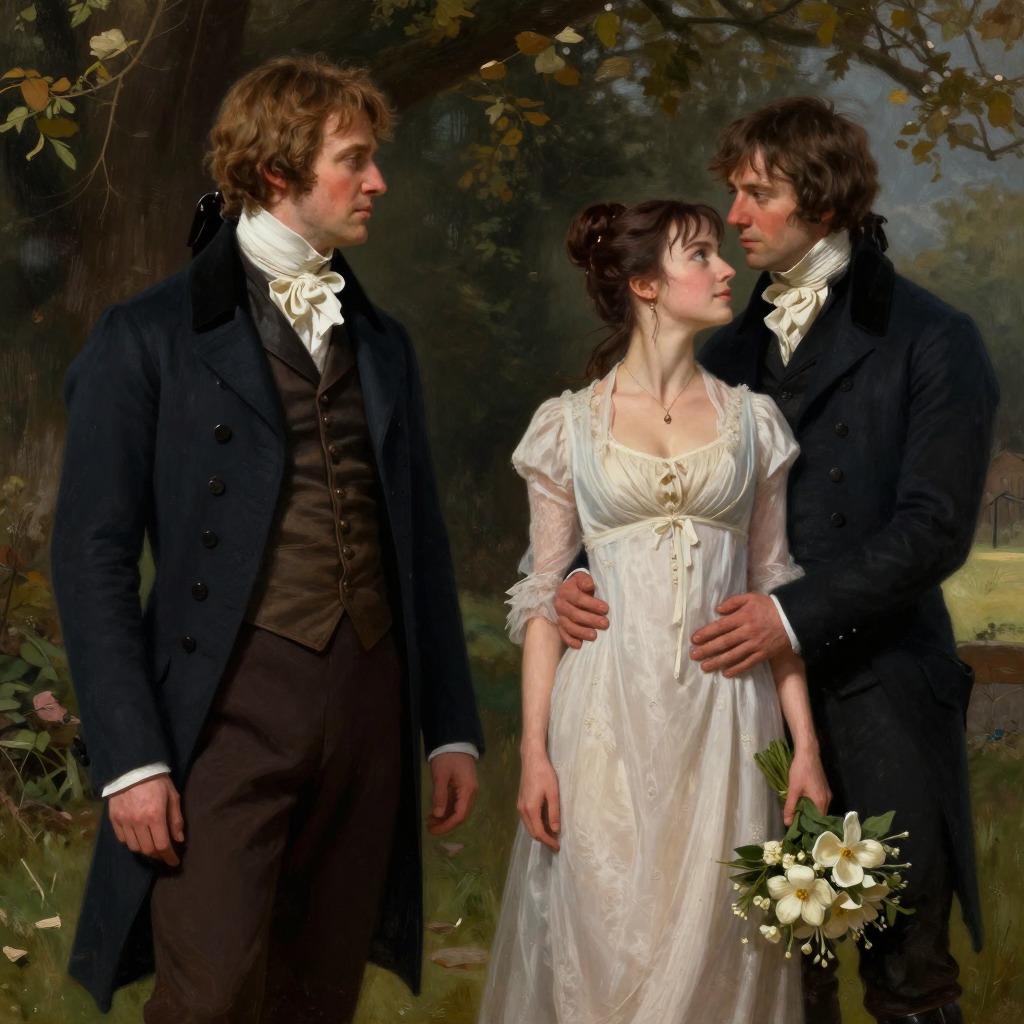
Darcy, encouraged by his aunt's report of Elizabeth's spirited defiance, returns to Longbourn. He and Elizabeth take a walk together, during which he renews his proposal. This time, he is humble and earnest, and Elizabeth, her prejudices gone, accepts him with joy. They confess their love and acknowledge their past mistakes. The proposal is a triumphant moment, marking the culmination of their emotional journeys and the triumph of love over pride and prejudice.
after Darcy's proposal
Elizabeth Tells Her Father
Elizabeth informs her father of her engagement to Darcy. Mr. Bennet is initially shocked and concerned, remembering her former dislike of him. However, Elizabeth earnestly assures him of her love and explains Darcy's true character, including his role in saving Lydia. Mr. Bennet is finally convinced and gives his blessing, acknowledging that Darcy is worthy of his favorite daughter. The scene is a touching moment of father-daughter understanding.
after learning of Elizabeth's engagement
Mrs. Bennet's Joy
When Mrs. Bennet learns of Elizabeth's engagement to Darcy, she is ecstatic. Her earlier dislike of him is completely forgotten in the face of his ten thousand a year and grand estate. She immediately begins planning the wedding and boasting about her daughter's good fortune. Her reaction is a comic contrast to Elizabeth's own more serious and heartfelt joy, but it also provides a satisfying conclusion to Mrs. Bennet's primary goal in life: seeing her daughters well married.
near the ending
The Two Couples are Married
Jane marries Bingley, and Elizabeth marries Darcy. The two sisters settle near each other in Derbyshire, with Jane and Bingley purchasing an estate within thirty miles of Pemberley. The marriages bring happiness and stability to the family. Kitty benefits from the society of her elder sisters, Mary is forced to engage more with the world, and Lydia and Wickham continue their irresponsible life, though Darcy assists them discreetly. The novel concludes with a sense of harmony and fulfillment.
after the marriages
Epilogue: Life at Pemberley
The novel concludes with a brief account of the future lives of the main characters. Elizabeth and Darcy live happily at Pemberley, with Georgiana becoming a beloved sister. Lady Catherine eventually reconciles with the couple, though she remains haughty. The Gardiners remain close friends and are credited with being the means of uniting Elizabeth and Darcy. The final lines affirm the triumph of love, understanding, and the correction of pride and prejudice.